Scents of Arrival
The doors open, the air shifts, and that gentle blend of clean, fresh, floral, or woody notes waft towards your nose like on a ribbon floating through the air. It’s subtle, and when your body is ready it’s unmistakable. Your body responds in kind with a subtle slowing in pace, a breath that lands differently, a small release like shoulders relaxing that wasn’t planned.
That scent is not indulgence. It’s a sensory interruption.
Hotel scents have been crafted into a variety of fragrances to create a sense of comfort, calm, and hospitality. Our sense of smell stirs up and evokes emotions and memories.
Question: Why don’t we always notice the scent?
Our senses don’t register every cue. Some signals land immediately; others get lost in the pace we were keeping before we arrived.
The arrival is sensory and not always logical.
This newsletter explores how travel becomes restorative, meaningful, and personal — not because of the destination, but because of how you arrive in it.
Signs You Might Not Have Arrived
We imagine vacations long before we take them. Scrolling destinations, saving photos, building anticipation for the version of ourselves we hope will show up there.
But we bring our full selves on vacation. Our pace, our habits, our personality, and our invisible load. All of it travels with us.
When the sensory release does not come, when the shoulders do not drop and the breath does not land differently, it might be because we have not truly arrived yet.
Do any of these feel familiar?
Your mind is still running the coordination loop even though you are physically somewhere else. You’re not in Kansas anymore.
You moved through the moment as fast as you took the photograph.
You measured the day by what you checked off rather than what you took in.
Rest felt like something to get to later, after the sites, after the itinerary, after everyone else was taken care of.
Travel as Well‑Being & Restoration
Our bodies and minds don’t always synchronize on vacation. One may crave rest while the other is still processing the pace we left behind.
Research says travel actually supports our well-being. But well-being is not a destination, it’s a state of action and something we must act upon. Travel is an act, the journey of going and being in a new place.
Dr. Susan Albers Psychologist at Cleveland Clinic says “Vacations are essential. They’re not optional.” The benefits of vacations are important because of how it impacts your brain and body. Vacations are the opportunity to complete the stress cycle.
Journal of Travel Research (2024) confirms frequent leisure travel is directly associated with higher happiness and greater psychological resilience.
The Framingham Heart Study confirms women who vacation at least twice per year have 8X times lower risk of developing heart disease.
The Scandinavian Journal of Work, Environment & Health (2019) identified that every 10 additional paid vacation days for working American women odds of depression were reduced by 29%.
Cornell researchers found that people are measurably happier simply thinking about an upcoming trip than thinking about an upcoming purchase. Your next vacation delivers joy before you ever board a plane.
These are not lifestyle claims. These are physiological outcomes.
Travel is not a luxury. It is a health intervention.
Postcard Confession: The Moment My Sister Knew Before I Did
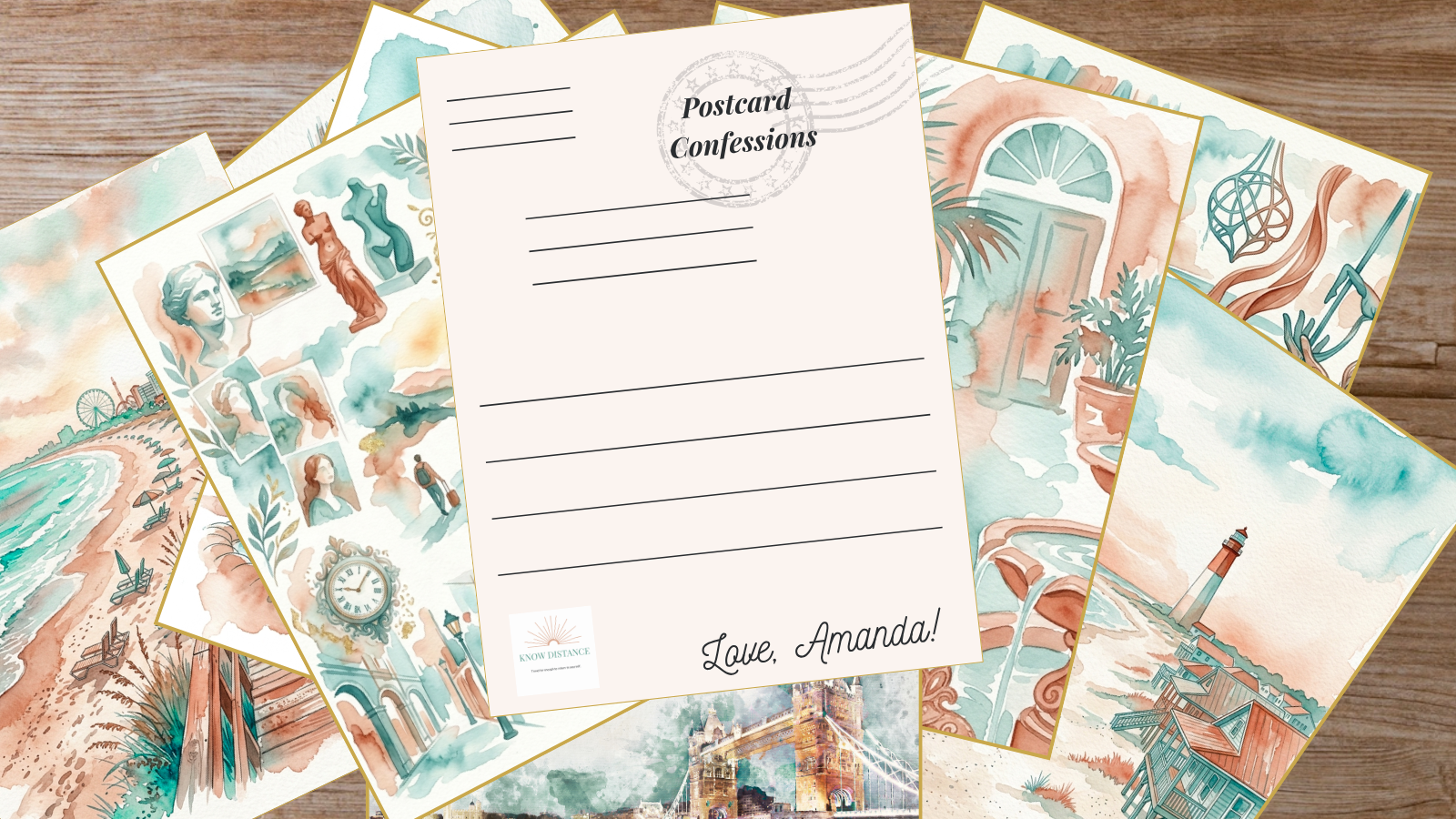
Postcard Confession image by Know Distance
Walking off Michigan Avenue into our hotel on a windy summer Chicago day, the second set of doors slid open and my sister stopped. She looked at me and said, “Oh…that scent tells me we a have arrived back at the hotel. You remember, we smelled it coming in every day on our last vacation.” I had not noticed the scent until she spoke up.
We had spent the day sightseeing, yet my mind was spinning on a hamster wheel, still churning through conference prep even though my body had arrived somewhere beautiful. She was right. It was the hotel scent. I stopped in the foyer, took a breath and my shoulders lowered and my mind quieted.
Not because I decided to rest, but I was reminded of the scent and took time to smell the lobby. The rest of the trip I recognized the air and allowed the sensory fragrance to evoke the emotions and memories “I’m home.” Well, my vacation home.
Ways to Arrive
Honestly, our bodies move between stress and well-being all the time, and it’s normal even on vacation.
Your body already knows how to rest. It did it the moment your shoulders dropped in that hotel lobby without you deciding to let them.
The work is not learning something new. It is noticing what is already happening.
Four things worth trying:
Choose one photo from a past trip and remember what made that moment feel good. Not the scenery. The experience. Use it as a reference point for what you want more of.
Decide your one non-negotiable before you leave. Sleep in. A slow breakfast. A long walk. An hour alone. A dinner you don’t compromise on.
Budget for the surprises that stretch you, and the ones that delight you. Both matter. Both shape the trip.
Pick one physical marker of arrival before you go. The lobby scent. The first drink. The quiet of the room. The view from the window. The moment you drop your bags. Choosing it ahead of time helps you recognize the shift when it happens.
Awe Intention
“Let your body notice something before your mind explains it.”
Welcome to Know Your Travel, Let It Set You Free
I am Amanda Bacqué, founder of Know Distance. This newsletter explores how travel becomes restorative and personal for the women who give everything to everyone and are ready to let travel give something back.
If you want to understand what your body already knows, where awe moves through you, what you carry into every trip, and how close you are to coming home restored, the Know Distance Travel Reflection Assessment is where your journey begins.
Travel does not restore you because of where you go. It restores you because of what you bring to it and what you allow yourself to receive.
Au’revoir y’all!
Amanda